Our software development process
Clear stages, visible progress and shared ownership of decisions, so you always know what is being built, why, and when it will be ready.
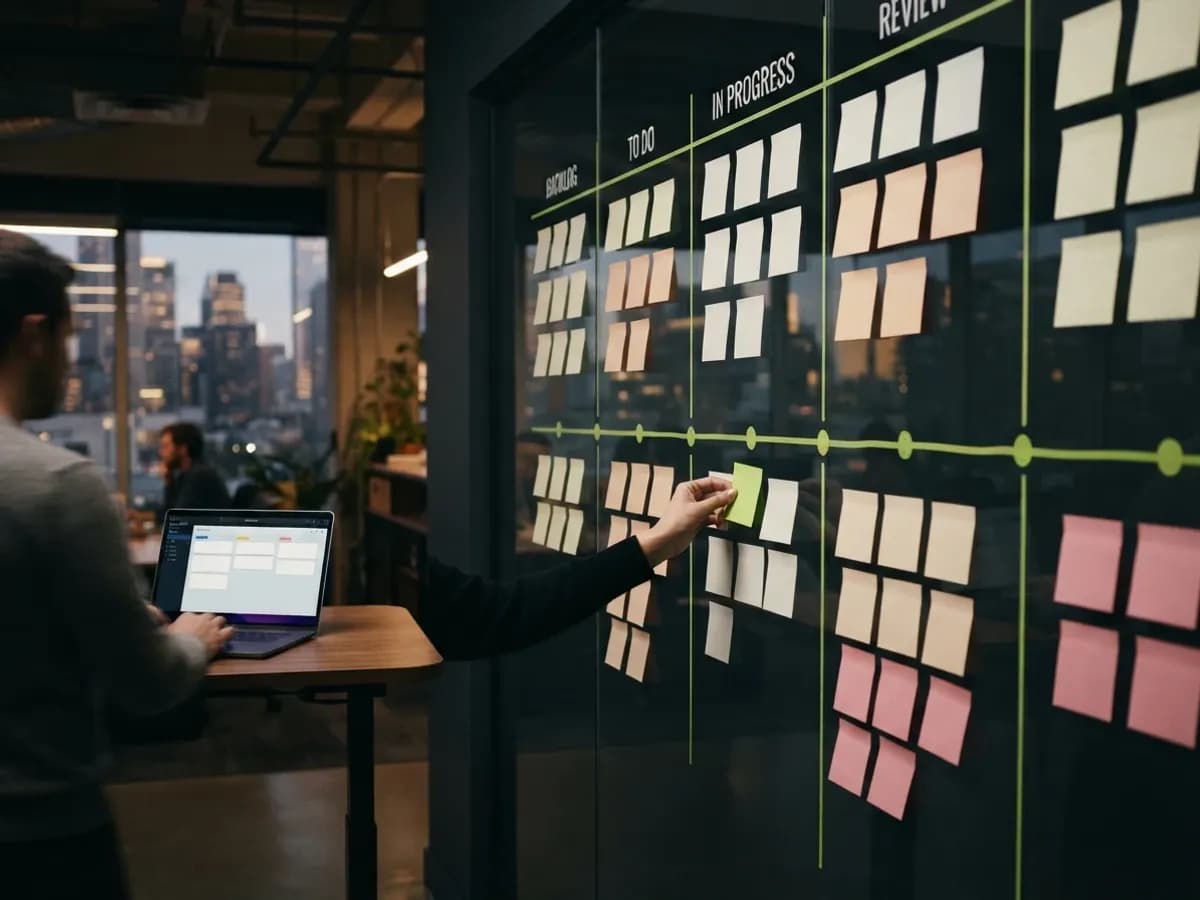
Five stages
From first workshop to long-term support
Step 1
Discover
Workshops with your stakeholders to map goals, users, constraints and existing systems. You leave with a prioritized scope, risks and a delivery plan.
Step 2
Design
Solution architecture, UX flows and clickable prototypes validated with real users before engineering effort is committed.
Step 3
Build
Two-week sprints with working software demoed at the end of each one, code reviews on every change and automated testing in the pipeline.
Step 4
Launch
Security review, performance testing, staged rollouts and monitoring set up before go-live, so release day is routine rather than risky.
Step 5
Evolve
Post-launch support, analytics-driven iteration and SLA-backed maintenance to keep the product secure, fast and aligned with the roadmap.
Why discovery matters
Most failed projects fail before the first line of code
Unclear goals, unvalidated assumptions and hidden integration work are the most common reasons software runs late or over budget. Discovery exists to surface them early, when changing direction costs a conversation rather than a rewrite.
In discovery we interview stakeholders and users, review existing systems and data, and map the riskiest assumptions. The output is a prioritized scope, a solution architecture, a release plan and an estimate you can take to your leadership with confidence.
Governance
How we keep delivery transparent
Sprint demos
Working software is shown at the end of every sprint so priorities are set from what exists, not from status slides.
Shared backlog
Your team sees the same Jira board, estimates and acceptance criteria our engineers use day to day.
Quality gates
Peer code review, automated tests and security checks run in CI before any change reaches a release branch.
Living documentation
Architecture decisions, runbooks and API references are kept in your repositories and updated as the system evolves.
Engagement models
Choose how you want to work with us
Project-based delivery
A cross-functional team owns a defined scope end to end, from discovery to launch, with milestones, demos and a single accountable delivery lead.
Dedicated development team
A long-term team of engineers, QA and a delivery manager that works exclusively on your roadmap and scales up or down with your needs.
Staff augmentation
Vetted specialists join your existing team, follow your processes and tools, and fill skill or capacity gaps without the overhead of hiring.
Principles
What guides every engagement
One partner across the stack
Product engineering, AI, security, cloud operations and staffing live under one roof, so the team that designs your platform can also secure it, run it and scale the people behind it.
US hours, global depth
An Austin headquarters sets priorities on US time while engineering hubs in Europe, the Middle East, Africa and Asia extend the working day for faster turnaround on builds and support.
Security designed in, not bolted on
A dedicated cybersecurity practice reviews architecture, access and data handling from the first sprint, instead of discovering gaps at launch or during an audit.
Outcomes over output
Every engagement starts by agreeing what success looks like for the business: adoption, cost, speed or revenue. Scope, sprints and reporting are then organized around those targets.
Transparent delivery
You get direct access to the people doing the work, shared boards in Jira, sprint demos and plain-English status reports. Code, documentation and infrastructure are yours from day one.
Built to be maintained
We favor proven frameworks, automated tests, CI/CD and clear documentation so your platform stays easy to extend, whether our team continues with you or hands it over.
Ready to start with discovery?
A short call is enough to scope a discovery phase and agree what you’ll get out of it.

FAQ
Process FAQs
Do you follow Scrum, Kanban or something else?
Most product work runs in two-week Scrum sprints because they create a predictable rhythm of planning, demos and retrospectives. Support and operations work usually runs on Kanban with agreed service levels. We adapt the cadence to your organization rather than forcing a framework on it.
How involved does our team need to be?
We ask for a product owner who can make scope decisions and join sprint reviews, plus access to subject-matter experts during discovery. Beyond that, involvement is up to you; some clients join daily stand-ups, others prefer a weekly summary and demo.
What happens if priorities change mid-project?
Change is expected. New requests go into the backlog, are estimated and prioritized with you at the next planning session. For fixed-scope projects we agree up front how changes affect timeline and budget, so there are no surprises.
How do you report progress?
You get access to the live backlog, sprint demos and a short written status covering progress against milestones, risks, decisions needed and budget burn. Reporting frequency and format are agreed during onboarding.