API Development Services and Integrations
We design, build and document APIs that your applications, partners and customers can rely on, and we integrate the third-party platforms your business depends on so data moves accurately without manual effort.

What you get
- REST API design and development
- Third-party platform integrations
- Webhooks and event-driven integration
- Partner and public APIs
The challenge
Brittle integrations quietly become a business risk
Modern companies run on dozens of connected services: payment processors, CRMs, shipping carriers, identity providers, marketing platforms and internal databases. Each connection is often built in a hurry by whoever needed it, with little error handling and no monitoring. When a vendor changes a field or rate-limits a request, orders stall, records duplicate and nobody notices until a customer complains.
Internally, the same pattern appears in APIs that grew without a design. Endpoints return inconsistent shapes, versioning is ad hoc, authentication varies by route and documentation lags behind the code. Front-end, mobile and partner teams lose time reverse-engineering behavior, and every change risks breaking a consumer you did not know existed. Good APIs are products in their own right and deserve the same discipline.
Silent integration failures
Failed syncs and dropped webhooks go unnoticed without retries, alerting and reconciliation, leaving data out of step between systems.
Inconsistent API design
Different naming, error formats and pagination styles across endpoints slow down every team that consumes them.
Breaking changes for consumers
Without versioning and deprecation policies, a single deployment can break mobile apps in the field or partner integrations.
Security exposure at the edge
Over-permissive tokens, missing rate limits and verbose errors turn APIs into a common entry point for attackers.
Our approach
How we design APIs and integrations
We design contracts before code. Using OpenAPI specifications, we agree on resources, naming, error formats, pagination and authentication with the teams who will consume the API, and we generate mock servers so front-end and partner work can begin in parallel. The contract then drives automated tests, documentation and client SDKs, keeping all of them consistent as the API evolves. Breaking changes are flagged automatically in review.
For integrations, we assume failure. Every connection to a third-party service includes idempotent writes, retries with backoff, dead-letter handling, webhook signature validation and reconciliation jobs that compare records on both sides. Where several systems need the same event, we introduce queues or an event bus rather than point-to-point calls, which keeps services decoupled and makes new integrations far cheaper to add.
Contract-first design
An agreed specification is the single source for implementation, tests and documentation, which prevents drift between what is promised and what ships.
Design for failure
Retries, idempotency and reconciliation are standard in every integration, because external services will eventually time out or change.
Secure at every boundary
Scoped tokens, rate limiting, input validation and audit logging protect each endpoint, following OWASP API security guidance.
Observable by default
Structured logs, metrics and traces for every request and sync job let you see failures before customers report them.
Capabilities
API development and integration services
We build new APIs, rescue existing ones and connect the platforms your teams use every day.
REST API design and development
Resource-oriented APIs in Node.js, FastAPI, Django or .NET Core with consistent conventions, OpenAPI documentation, automated contract tests and clear versioning that lets consumers upgrade on their own schedule. Consistent error formats and pagination mean every consuming team learns the conventions once and applies them everywhere.
Third-party platform integrations
Reliable connections to payment, CRM, ERP, e-commerce, shipping, accounting and communication platforms, including Shopify and Microsoft 365, with authentication, rate-limit handling and error recovery built in. Each vendor sits behind its own adapter, so a change to one provider's API is contained to a single, well-tested module.
Webhooks and event-driven integration
Inbound and outbound webhooks with signature verification, queuing and replay, plus event streams that let multiple systems react to the same business event without tight coupling. Replay tools let your team reprocess failed events safely after an outage, without writing one-off scripts or touching the database directly.
Partner and public APIs
External APIs with API keys or OAuth, usage quotas, sandbox environments and developer documentation, so partners and customers can integrate with your platform without constant support from your engineers. Clear onboarding and examples shorten the time partners need to go live, which matters when integrations are part of your sales process.
Legacy system wrapping
Modern API layers in front of older databases, SOAP services or file-based interfaces, giving new applications clean access to legacy data without modifying the fragile systems underneath. The wrapper also becomes the seam through which legacy functionality can be replaced gradually later on.
API gateways and security
Gateway configuration for authentication, throttling, request validation and routing on AWS or Azure, with centralized logging that supports security monitoring and incident investigation. Centralizing these concerns at the gateway keeps individual services simpler and ensures that security policies are applied consistently across every endpoint you expose.
Data synchronization and reconciliation
Scheduled and real-time sync jobs with conflict rules, change tracking and automated reconciliation reports that flag mismatched records between systems before they affect customers or finance. Reports are routed to the team that owns each system, so discrepancies are resolved by the people best placed to judge them.
Solutions
Integrations and APIs we deliver
- Payment and billing integrations
- CRM and marketing platform sync
- E-commerce order and inventory sync
- Shipping and logistics carrier connections
- Identity and single sign-on integration
- Partner-facing developer APIs
- Back ends shared by web and mobile apps
Technology
Tools we use for this work
 Node.js
 TypeScript
 FastAPI
 Python
 .NET Core
 PostgreSQL
 Redis
 AWS
 Microsoft Azure
 Shopify
See the full stack on our technologies page.
Process
Our API Development & Integrations process
Step 1
Integration inventory
We list every system involved, the data each one owns, volumes, latency needs and the failure modes that matter. This determines which flows need real-time APIs and which suit scheduled or event-driven sync.
Step 2
Contract design and review
We draft OpenAPI specifications or event schemas and review them with consuming teams and partners. Mock endpoints let those teams start building against the contract while implementation proceeds. Disagreements are settled on paper.
Step 3
Implementation with contract tests
Endpoints and connectors are built with automated tests that verify behavior against the agreed contract, including error responses, pagination limits and authentication rules, on every code change. Failures block the merge automatically.
Step 4
Failure and load testing
We simulate vendor timeouts, malformed payloads, duplicate webhooks and traffic spikes to confirm retries, idempotency and throttling behave correctly before any production data flows. We fix weak points and retest before go-live.
Step 5
Monitoring and documentation
Dashboards and alerts track error rates, latency and sync backlogs after go-live. Developer documentation, changelogs and deprecation notices keep consumers informed as the API continues to evolve. Ownership of each alert is clearly assigned.
Planning a API Development & Integrations project?
Get an architect’s view on scope, approach and team before you commit budget.

Outcomes
What changes for your business
- 01
Accurate data across systems
Reconciliation and reliable sync reduce duplicate records, missed orders and manual corrections between platforms.
- 02
Faster parallel development
Agreed contracts and mock servers let front-end, mobile and partner teams build at the same time as the back end.
- 03
Cheaper future integrations
An event-driven foundation means adding a new system is a configuration and subscriber task rather than a rewrite.
- 04
Reduced attack surface
Consistent authentication, scoped permissions and rate limiting close common API security gaps.
- 05
Early visibility into failures
Alerting on sync backlogs and error rates surfaces problems to engineers before they reach customers.
Proof
Related case studies
 Streaming
MYCO
MYCO: Building and Scaling a Global Web3 Streaming Platform
Ability TechHub partnered with MYCO from its early growth phase to architect, scale and operate a Web3 streaming platform that supports millions of users globally.
- Global users supported
- Millions
- Streaming latency
- Reduced
 AI
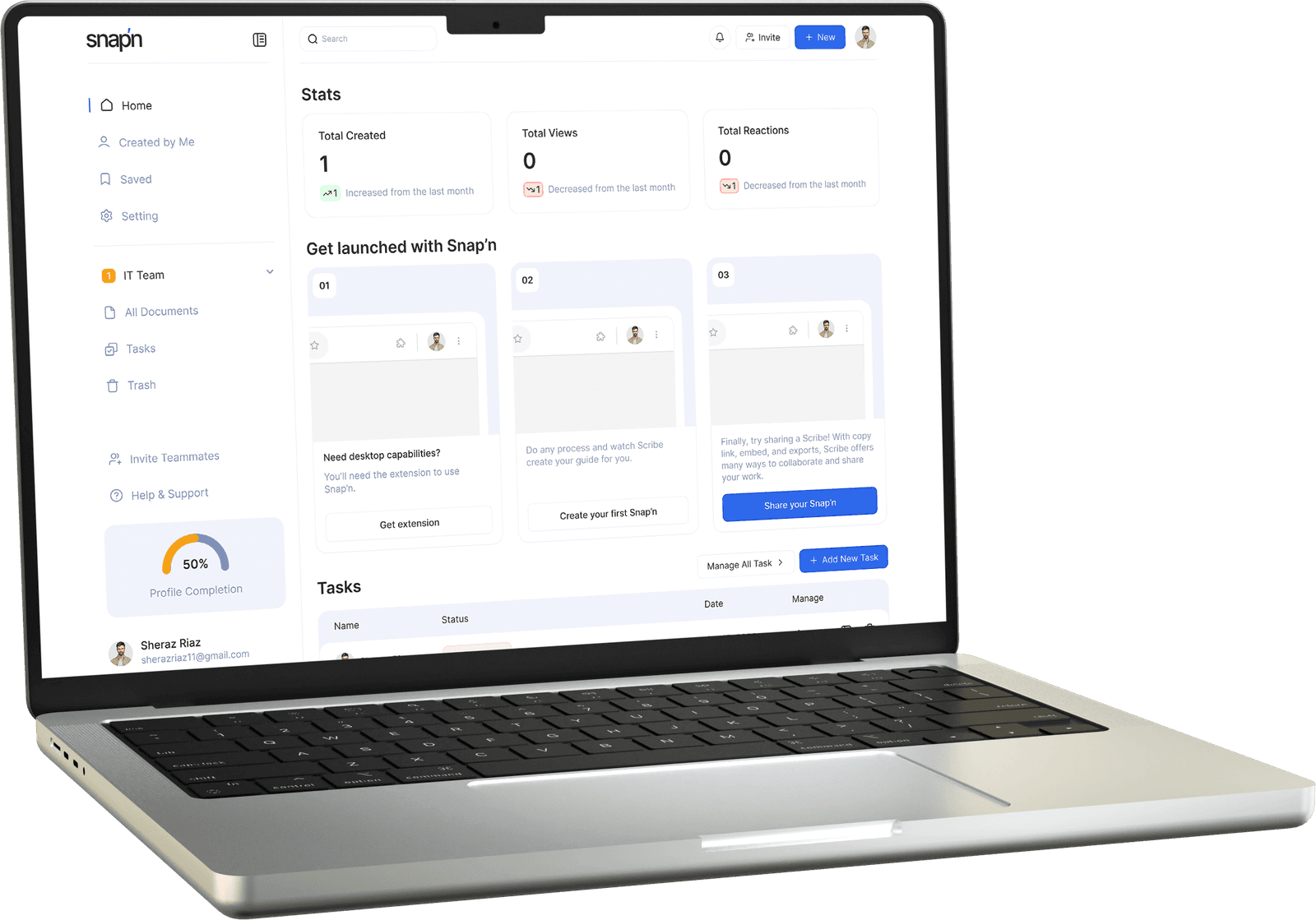
Snapn
Snapn: Accelerating Documentation with AI Workflow Automation
Ability designed and engineered Snapn’s AI-powered documentation platform, helping teams create, manage and scale knowledge with far less manual effort.
- Documentation Time Reduced
- 68%
- Team Productivity Increase
- 2.7x
Industries
Industries we serve with API Development & Integrations

Retail & E-commerce
Ecommerce software development for retailers and consumer brands that need fast storefronts, connected inventory and operations that scale with demand.
Learn more
Fintech & Banking
Fintech software development for banks, lenders and payment companies that need secure platforms, modern customer operations and audit-ready delivery.
Learn more
Logistics & Supply Chain
Logistics software development for carriers, 3PLs and shippers that need real-time visibility, connected partners and fewer manual handoffs.
Learn more
Startups & SaaS
Software development for startups and SaaS companies that need to validate quickly, ship a dependable product and scale engineering without slowing down.
Learn more
FAQ
API Development & Integrations FAQs
Should we use REST, GraphQL or event-driven APIs?
REST remains the best default for most business APIs because it is widely understood, cache-friendly and easy to secure. GraphQL can help when many clients need flexible views of complex related data. Event-driven messaging suits workflows where several systems must react to the same change. Many platforms combine these, and we recommend based on your consumers and data patterns.
How do you keep third-party integrations from breaking?
We isolate each vendor behind an internal adapter, validate payloads against expected schemas, handle rate limits and retries automatically, and monitor error rates per integration. Reconciliation jobs catch any records that slip through. When a vendor announces API changes, the adapter is the only place that needs updating, which protects the rest of your codebase.
What affects the cost of API development or integration work?
Cost typically depends on the number of systems and endpoints, the quality of the vendor APIs involved, data transformation complexity, volume and latency requirements, security and compliance needs, and whether partners require public documentation and sandbox environments. Poorly documented legacy or vendor systems often take longer to integrate, so we assess them early and flag the uncertainty in our estimate.
How do you secure APIs?
We use OAuth 2.0 or scoped API keys, enforce authorization on every request, validate input against schemas, apply rate limits, avoid exposing internal identifiers or stack traces and log access for auditing. Secrets are stored in managed vaults rather than code. For sensitive APIs, our cybersecurity team can perform penetration testing focused on the OWASP API Security Top 10.
Can you document and stabilize an API another team built?
Yes. We begin by generating an OpenAPI description from current behavior, then add contract tests that lock that behavior in place. With that safety net, we can standardize errors and pagination, introduce versioning and fix security gaps without surprising existing consumers. The result is an API your team can change confidently and partners can understand.
Do you offer support after integrations go live?
We can monitor integrations under an ongoing support arrangement, responding to alerts, handling vendor API changes and adding new connections as your stack grows. Alternatively, we hand over runbooks, dashboards and adapter code to your team. Either way, every integration ships with documentation explaining its data mappings, failure handling and how to replay failed events.
Related services
Often combined with
Enterprise Software Development
Secure, integrated enterprise systems that modernize legacy platforms and connect departments without disrupting operations.
Explore serviceCloud Solutions
Cloud architecture, migration and modernization on AWS and Azure, planned for reliability, security and controlled cost.
Explore serviceAI Automation
Intelligent process automation and AI agents that read documents, make routine decisions and move work between systems with human oversight.
Explore service