Managed IT services
We take day-to-day ownership of your infrastructure, cloud environments and business applications, with round-the-clock monitoring, agreed response targets and a documented operating model your own team can see into at any time.
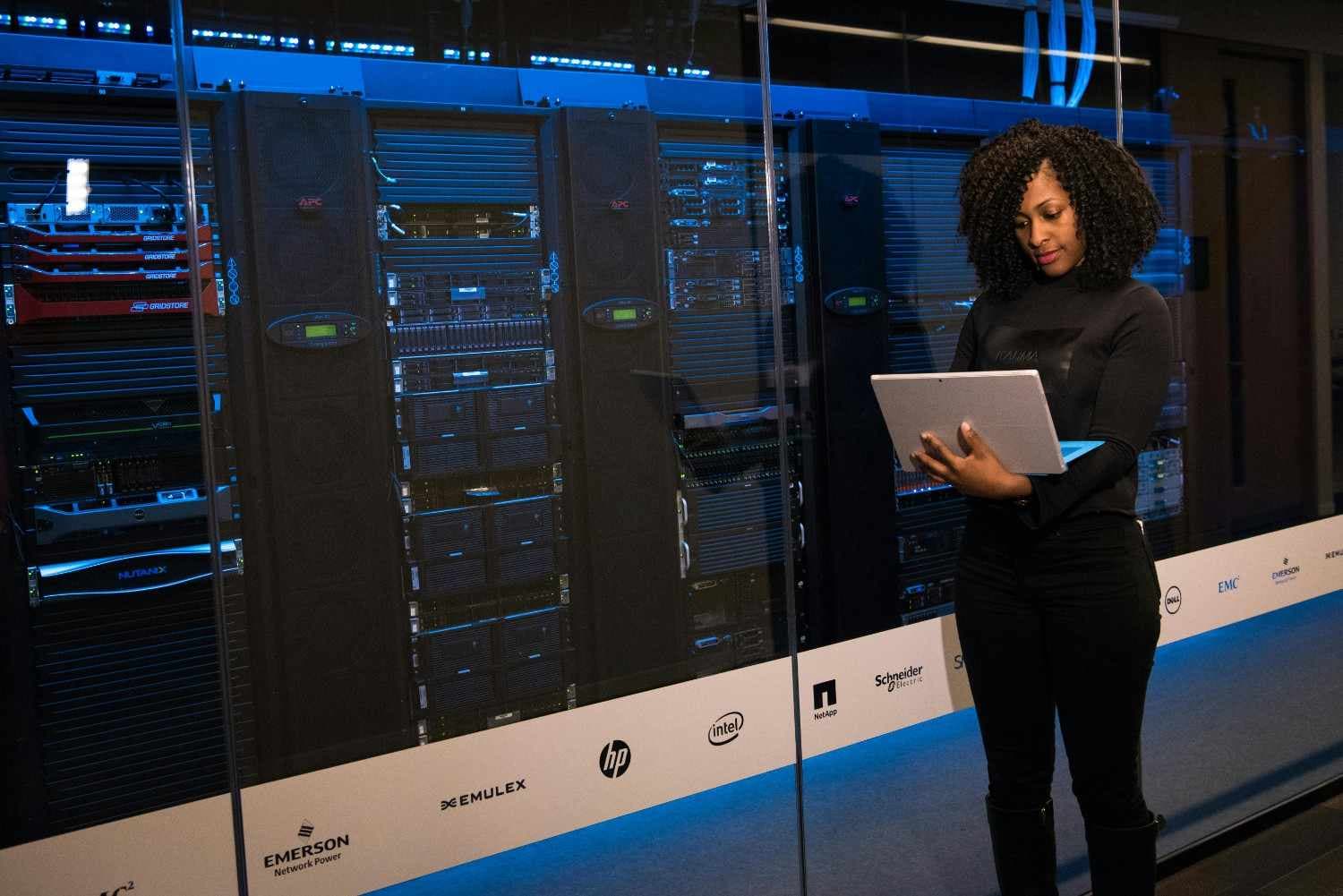
What you get
- Infrastructure management
- Cloud management
- 24/7 monitoring and alerting
- Application support
The challenge
When IT operations run on goodwill instead of process
Most growing companies did not plan their IT estate; it accumulated. A few cloud accounts, an on-premise server nobody wants to touch, a line-of-business application maintained by whoever wrote it, and Microsoft 365 administered in spare moments. Each piece works until it does not, and when something fails at 2 a.m. there is no runbook, no named owner and no record of what changed last.
The business impact is rarely one dramatic outage. It is slow erosion: engineers pulled off product work to reset access, patch servers or chase alerts, cloud bills that keep rising without explanation, and audit questions answered with screenshots. Building an in-house operations team for round-the-clock coverage is expensive and hard to staff, so the gaps stay open longer than anyone intends.
Reactive firefighting
Issues are found by users rather than by monitoring, so every incident starts late and resolution depends on whoever happens to be available.
No clear ownership
Infrastructure, cloud and applications are split across vendors and internal staff, and nobody is accountable for the service end to end.
Unpredictable cloud spend
Idle resources, oversized instances and forgotten test environments inflate monthly bills without anyone noticing until finance asks.
Thin documentation
Configuration lives in people’s heads. When a key person leaves, recovery procedures, credentials and dependencies leave with them.
Our approach
An operations model built around your SLAs, not our ticket queue
We start by understanding what matters to the business: which systems generate revenue, which ones can wait until morning, and what an acceptable recovery time actually looks like. Those answers become severity levels, response targets and escalation paths that we agree with you in writing, so both sides measure the service in the same way. We also agree which decisions stay with your team, such as production changes during trading hours or vendor contract renewals.
From there we take ownership in stages. We document the environment, put monitoring and alerting on the components that matter, standardize patching and backups, and then move day-to-day support to our team. Your engineers keep administrative visibility throughout, and monthly reviews turn incident data into a prioritized list of improvements rather than a report nobody reads. Over time, the share of work spent on planned improvement should grow while unplanned firefighting shrinks.
Monitoring before promises
We agree response targets only once we can see the environment. Alerting and health checks come first, so commitments rest on real signals.
Documented by default
Every change, runbook and recovery procedure is written into a shared knowledge base you own, removing single points of failure on both sides.
Least-privilege access
Our engineers work through named accounts, role-based permissions and logged sessions. Access is reviewed regularly and revoked cleanly when roles change.
Fix the cause, not the ticket
Recurring incidents are treated as problems to eliminate. Root causes are tracked and fixes are scheduled instead of closing the same ticket every week.
Capabilities
Managed IT capabilities
Choose the scope that fits your environment. Most clients start with monitoring and support for core infrastructure, then extend into cloud and application management once the operating rhythm is established.
Infrastructure management
Day-to-day administration of servers, storage, networks and virtualization, on-premise or hybrid. We handle patching, capacity checks, configuration baselines and lifecycle planning so hardware and operating systems stay supported, secure and sized for the workload they actually carry.
Cloud management
Operational ownership of AWS and Azure environments, covering account structure, identity, backups, scaling policies and cost reviews. We right-size resources, retire unused environments and tag spend by team or product, so cloud costs become something you can explain and plan around.
24/7 monitoring and alerting
Round-the-clock health monitoring for servers, containers, databases, endpoints and critical applications. Alerts are tuned to cut noise, routed by severity and linked to runbooks, so the engineer who responds knows what to check first and when to escalate.
Application support
L1 to L3 support for business applications and internal platforms, including incident triage, bug reproduction, minor fixes and release support, plus coordination with the original development team or vendor when a deeper code change is required.
Service desk and end-user support
A single point of contact for staff issues such as access requests, device setup, Microsoft 365 administration, email and collaboration tools. Tickets are categorized and reported, so recurring pain points become visible and fixable instead of quietly tolerated.
Backup and disaster recovery
Backup policies for databases, file stores and cloud workloads, with restore tests on a regular schedule. Recovery procedures and agreed recovery objectives are documented, so when something does fail the response is rehearsed rather than improvised under pressure.
Container and platform operations
Operational support for Docker and Kubernetes workloads, covering cluster upgrades, resource limits, log aggregation and deployment health. We work alongside your developers so that platform changes never slow down the release cadence they depend on.
Reporting and service reviews
Monthly reporting on SLA performance, incident trends, patch compliance and cloud spend, followed by a review session with your team. The output is a short list of decisions and improvements, not a dashboard that sits unopened in an inbox.
Solutions
What a managed IT engagement typically covers
- Environment discovery and asset inventory
- Severity matrix and SLA definitions
- Centralized monitoring and alert routing
- Scheduled patching and vulnerability remediation
- Cloud cost and right-sizing reviews
- Tested backup and restore procedures
- Runbooks and a shared knowledge base
- Monthly service reports and review meetings
Technology
Tools we use for this work
 AWS
 Microsoft Azure
 Docker
 Kubernetes
 Microsoft 365
 SQL Server
 PostgreSQL
 Jira
See the full stack on our technologies page.
Process
Our Managed IT Services process
Step 1
Discovery and assessment
We inventory infrastructure, cloud accounts, applications, access and existing tooling, then identify risks, single points of failure and quick wins. You receive a written assessment before committing to a scope.
Step 2
Service design
Together we define scope, severity levels, response and resolution targets, escalation contacts and reporting. This becomes the service agreement both teams work from.
Step 3
Transition and onboarding
Monitoring, documentation, access and ticket routing are set up alongside your current arrangements, and responsibility shifts in stages so nothing falls between the old and new model.
Step 4
Steady-state operations
Our team handles monitoring, incidents, changes and requests against the agreed SLAs, with clear shift hand-overs and regular communication with your named contacts.
Step 5
Review and optimize
Monthly service reviews cover SLA performance, recurring issues and spend. Agreed improvements are scheduled into the roadmap and tracked to completion.
Planning a Managed IT Services project?
Get an architect’s view on scope, approach and team before you commit budget.

Outcomes
What changes for your business
- 01
Fewer surprises
Problems are detected by monitoring before users report them, and incidents follow a known path from alert to resolution.
- 02
Engineers back on product work
Developers stop spending their days on access resets, patching and alert triage and return to work that moves the roadmap.
- 03
Explainable cloud costs
Spend is tagged, reviewed and right-sized regularly, so the monthly bill reflects what the business actually uses.
- 04
Lower key-person risk
Documented runbooks and shared knowledge mean recovery no longer depends on one individual being reachable.
- 05
Audit-ready records
Change logs, access reviews and backup tests are recorded as part of normal operations, making compliance questions easier to answer.
Proof
Related case studies

Industries
Industries we serve with Managed IT Services

Fintech & Banking
Fintech software development for banks, lenders and payment companies that need secure platforms, modern customer operations and audit-ready delivery.
Learn more
Startups & SaaS
Software development for startups and SaaS companies that need to validate quickly, ship a dependable product and scale engineering without slowing down.
Learn more
Logistics & Supply Chain
Logistics software development for carriers, 3PLs and shippers that need real-time visibility, connected partners and fewer manual handoffs.
Learn more
Healthcare
Healthcare software development for providers and health tech companies that need secure, interoperable systems clinicians and patients actually use.
Learn more
FAQ
Managed IT Services FAQs
What does a managed IT services engagement usually include?
Scope is agreed per client, but most engagements combine infrastructure and cloud administration, 24/7 monitoring, incident response, patching, backups and a service desk for staff. Application support and container operations can be added where needed. Everything in scope is listed in the service agreement alongside severity levels and response targets, so there is no ambiguity about what we handle and what stays with your team.
How are SLAs defined and measured?
We agree severity levels with you based on business impact, then set response and resolution targets for each. Every ticket is timestamped in the service management tool from creation to closure, and monthly reports show performance against each target. When a target is missed, the review covers why it happened and what we will change, rather than hiding it inside an average.
Can you work with our existing tools and vendors?
Yes. We usually start with the monitoring, ticketing and cloud tooling you already pay for and only recommend changes where there is a clear gap. Where third-party vendors support specific systems, we coordinate with them on your behalf, track their response and keep you informed, so you deal with one point of contact instead of several.
How do you handle access and security for our environment?
Our engineers use named accounts with role-based permissions, multi-factor authentication and logged sessions. Access is granted only for the systems in scope and reviewed regularly. Credentials are held in an agreed password vault under defined controls, and when an engineer leaves the engagement their access is revoked as part of a documented offboarding checklist.
What does the cost of managed IT services depend on?
Cost typically depends on the number of servers, cloud accounts, endpoints and applications in scope, the support hours required and the response targets you need. A business-hours service desk costs less than round-the-clock coverage with tight resolution targets. We share a scoped proposal after the assessment, so the price reflects your environment rather than a generic package.
What happens during the transition from our current provider?
We run the transition in parallel rather than as a hard switch. Monitoring, documentation and access are set up first, then responsibility moves over in agreed stages. We work with you to collect credentials, configuration details and open tickets from the outgoing provider, and we plan a short overlap period so nothing is lost in the hand-over.
Related services
Often combined with
Cloud Solutions
Cloud architecture, migration and modernization on AWS and Azure, planned for reliability, security and controlled cost.
Explore serviceDevOps Services
CI/CD pipelines, infrastructure as code, observability and automation that make releases frequent, safe and routine.
Explore serviceManaged Cybersecurity Services
Security audits, threat monitoring, incident response and network security delivered as an ongoing, leadership-led managed security program.
Explore service