Enterprise Software Development
We help IT and business leaders modernize aging systems, connect ERP, CRM and operational platforms, and build line-of-business applications that meet enterprise standards for security, auditability and uptime.

What you get
- Application portfolio assessment
- Legacy modernization
- ERP and CRM integration
- Line-of-business applications
The challenge
Legacy systems hold critical data and slow every initiative
Large organizations run on systems that were built for a different era. Core applications written decades ago still process transactions, but the engineers who understood them have moved on, documentation is thin and every change requires lengthy regression testing. Meanwhile, the business wants digital channels, real-time reporting and automation that the legacy estate was never designed to support. The gap between ambition and capability widens every year.
Replacing these systems outright is risky and rarely funded in one go. Integration between ERP, CRM, finance and departmental tools is often handled by nightly batch files and manual reconciliation, so data is stale and errors surface late. Enterprise leaders need a modernization path that delivers value in stages, satisfies security and audit teams, and never puts day-to-day operations at risk.
Fragile legacy platforms
Monolithic applications on aging frameworks are costly to maintain, difficult to staff and risky to change without a full regression cycle.
Siloed departmental systems
Finance, operations, sales and service teams each run their own tools, and data moves between them through exports and manual re-keying.
Governance and audit pressure
Regulators and internal auditors expect access controls, change history and data lineage that older systems cannot produce easily.
Change fatigue among staff
Employees who have lived through failed system rollouts resist new tools unless they clearly simplify their daily work.
Our approach
How we deliver enterprise software without operational risk
We favor progressive modernization over big-bang replacement. After mapping your application landscape and the business capabilities each system supports, we place new services and interfaces around the legacy core, route functionality to them one capability at a time, and retire old components only when the new ones are proven in production. Each stage has its own business case and rollback plan.
Enterprise delivery also means working within your governance. We align with your architecture review board, change advisory process, identity standards and security controls, and we document decisions in a form your auditors can follow. Our teams are comfortable on .NET Core, SQL Server, Oracle and Azure estates as well as modern open-source stacks, so we meet your environment where it is.
Incremental, reversible change
Every migration step can be rolled back, so the business is never dependent on a single high-stakes cutover weekend.
Governance built in
Role-based access, audit trails, segregation of duties and change records are designed into the system rather than added for an audit.
Integration over duplication
We connect systems through managed APIs and events so each piece of data has one authoritative owner across the organization.
Adoption as a deliverable
Training, champions in each department and phased rollouts are planned as part of the project, because unused software delivers no value.
Capabilities
Enterprise software development services
We work across the enterprise application landscape, from assessing legacy estates to building and supporting new line-of-business systems.
Application portfolio assessment
An inventory of your systems, their business owners, dependencies, technical health and running costs, producing a prioritized modernization roadmap based on risk and value rather than technology preference. The assessment also highlights systems that can be consolidated or retired, which often frees budget for the modernization work itself.
Legacy modernization
Refactoring, re-platforming or progressively replacing aging applications, including migrations from older .NET Framework, classic ASP or desktop clients to modern .NET Core and web interfaces. We preserve the business rules embedded in old code by documenting them and covering them with tests before anything is changed or moved.
ERP and CRM integration
Connecting Odoo and other ERP and CRM platforms with finance, warehouse and customer systems through APIs and event flows, replacing nightly batch exports and manual reconciliation. Integrations are monitored, and each record has a clear system of ownership so updates never conflict between platforms.
Line-of-business applications
Purpose-built applications for lending, claims, procurement, compliance tracking or service operations that encode your policies and approval chains while meeting enterprise access and audit requirements. These applications replace spreadsheets and email approvals with workflows that record who did what, when and under which policy version.
Enterprise data and reporting
Operational data stores and reporting layers on SQL Server, Oracle or PostgreSQL feeding Power BI, so leadership sees consistent, timely figures drawn from systems of record. Reporting reads from a dedicated layer so heavy queries never slow down transactional systems during business hours.
Identity and access integration
Single sign-on through Microsoft Entra ID or your identity provider, role mapping from directory groups and least-privilege access designed with your security team. Joiners, movers and leavers are handled automatically through directory groups, which closes the access gaps that auditors most often flag in enterprise applications.
Microsoft 365 and workplace integration
Embedding workflows into the tools employees already use, including Teams notifications, SharePoint document storage and Outlook actions, to reduce context switching and improve adoption. Approvals and alerts reach people where they already work, which shortens response times without asking staff to learn another tool.
Long-term application support
Managed maintenance with defined service levels, security patching, minor enhancements and knowledge retention, so critical systems never again depend on a single departing developer. Support includes regular dependency reviews and documentation updates, so the system remains healthy rather than slowly decaying back into a legacy problem.
Solutions
Enterprise systems we deliver
- Core banking and lending workflow tools
- CRM modernization and integration
- Procurement and approval systems
- Compliance and audit tracking applications
- Employee self-service portals
- Enterprise reporting hubs
- Integration layers between ERP, CRM and finance
Technology
Tools we use for this work
 .NET Core
 SQL Server
 Oracle
 Microsoft Azure
 Microsoft 365
 Power BI
 Odoo
 React
 Kubernetes
See the full stack on our technologies page.
Process
Our Enterprise Software Development process
Step 1
Landscape and capability mapping
We catalog the systems involved, the business capabilities they support, their integrations and their pain points, then agree with stakeholders which capability to modernize first based on value and risk.
Step 2
Target architecture and governance alignment
We design the target state and the transition architecture, then review both with your architecture, security and risk teams so approvals are secured before delivery begins rather than discovered midway.
Step 3
Integration layer first
Before replacing functionality, we put APIs and event streams around the legacy core. This creates a stable interface that new components can use and lets data flow reliably during the transition.
Step 4
Capability-by-capability migration
New modules take over one business capability at a time, often running in parallel with the legacy system and reconciled daily until results match and business owners sign off. Rollback stays available throughout.
Step 5
Rollout, training and decommissioning
Users are onboarded department by department with training and floor support, then the retired legacy components are archived with data retention handled according to your policies. Support staff are briefed before each department goes live.
Planning a Enterprise Software Development project?
Get an architect’s view on scope, approach and team before you commit budget.

Outcomes
What changes for your business
- 01
Modernization without disruption
Phased migration keeps critical operations running while legacy risk is retired step by step.
- 02
Connected departments
Integrated systems give every team the same, current data, reducing reconciliation effort and handoff errors.
- 03
Audit-ready systems
Access controls, change history and data lineage make internal and regulatory reviews faster and less disruptive.
- 04
Lower maintenance burden
Modern frameworks and documentation reduce dependence on scarce legacy skills and make support easier to staff.
- 05
Faster delivery of new initiatives
A clean integration layer lets future digital channels and automation projects build on existing data rather than starting from scratch.
Proof
Related case studies
Industries
Industries we serve with Enterprise Software Development

Fintech & Banking
Fintech software development for banks, lenders and payment companies that need secure platforms, modern customer operations and audit-ready delivery.
Learn more
Healthcare
Healthcare software development for providers and health tech companies that need secure, interoperable systems clinicians and patients actually use.
Learn more
Logistics & Supply Chain
Logistics software development for carriers, 3PLs and shippers that need real-time visibility, connected partners and fewer manual handoffs.
Learn more
Automotive
Automotive dealership software solutions and sales operations support that help dealer groups respond faster, convert more leads and retain owners.
Learn more
FAQ
Enterprise Software Development FAQs
Should we replace our legacy system or modernize it in place?
It depends on how well the system still supports the business, how scarce its skills are and how tangled its data has become. Many organizations benefit from a middle path: wrap the legacy core with APIs, move high-value capabilities to modern components first and retire the remainder over time. Our portfolio assessment gives you a recommendation per system with the trade-offs spelled out.
How do you minimize risk during an enterprise migration?
We migrate in small, reversible steps, run new and old components in parallel where results must match, reconcile data automatically and define rollback criteria before every release. Business owners sign off each capability based on evidence from parallel running. This approach takes discipline, but it removes the single high-risk cutover that causes most failed enterprise programs.
Can you work within our security and change management processes?
Yes. We adapt to your change advisory board, architecture review, access request and release windows rather than asking you to bypass them. Engineers work in your environments with least-privilege access, and we provide the design documents, test evidence and deployment records that your governance teams require for approval and audit.
What drives the cost of enterprise software projects?
Costs typically depend on the number of systems and integrations involved, the volume and quality of data to migrate, regulatory requirements, the degree of parallel running needed and the scale of user training. Breaking the program into capability-based phases allows each phase to be estimated, funded and evaluated independently, which gives finance teams far more control over spend.
Do you have experience with financial services systems?
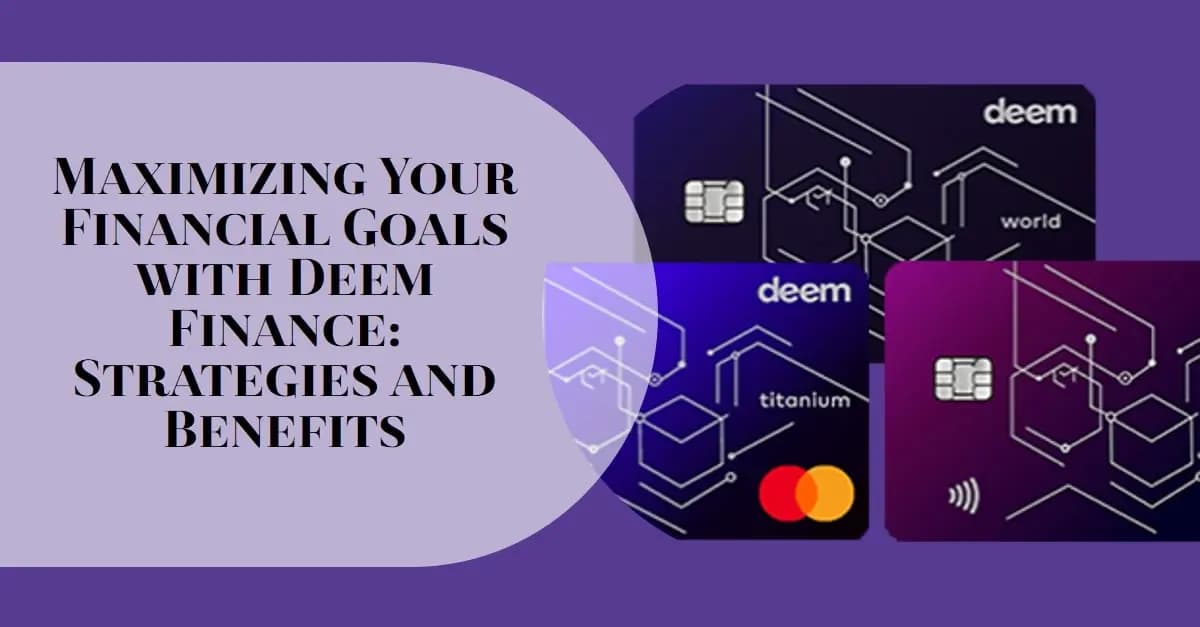
Yes. Our published work with a UAE banking and fintech institution, Deem Finance, covered core banking operations optimization and modern CRM and automation replacing legacy workflows, alongside customer operations transformation. Financial services projects bring strict requirements around access control, audit trails and data handling, and we design for those from the outset.
Who supports the system after it goes live?
You can choose. We offer managed application support with agreed response times, patching and enhancements, or we transition fully to your internal team with documentation, runbooks and a period of shadowing. Many enterprises choose a hybrid model in which we retain responsibility for complex integrations while internal staff handle day-to-day changes.
Related services
Often combined with
Custom Software Development
Purpose-built software engineered around how your business actually operates, with clean architecture and full code ownership.
Explore serviceAPI Development & Integrations
Well-designed APIs and dependable third-party integrations that connect your products, partners and internal systems.
Explore serviceManaged IT Services
Infrastructure, cloud and application support run under clear SLAs, with 24/7 monitoring and a team that knows your environment.
Explore service