Web Application Maintenance Services
We look after web applications once they are live, keeping frameworks current, closing security gaps, fixing bugs and watching performance, so the app keeps working as browsers, libraries and your business change.

Overview
About web application maintenance
Web applications age faster than most software. JavaScript frameworks and libraries release frequently, security advisories appear for packages buried deep in the dependency tree, browsers change how they handle cookies and storage, and hosting platforms deprecate runtimes. An app that was well built at launch can become slow, insecure and hard to change within a short time if nobody keeps it current.
Our web application maintenance services cover that ongoing work under a clear agreement. We monitor uptime, errors and real-user performance, triage issues by severity, apply security patches, and plan framework and dependency upgrades so they happen in small steps rather than as a painful rewrite later. Bug fixes and small enhancements are handled from a shared backlog, and you see every change through pull requests, release notes and regular reports.
We maintain apps we built and apps built by other teams, including React, Next.js, Node.js, Laravel, Django and .NET applications. A takeover starts with a structured review of code, infrastructure, tests and documentation, which gives you an honest picture of the app’s health and a prioritized plan. Where maintenance reveals deeper problems, we explain the options, from targeted refactoring to gradual modernization, without pushing a rebuild you do not need.
When you need it
- The developer or agency who built your web app is no longer available and nobody else understands the code.
- Security scanners or customers report vulnerable dependencies and you are unsure which ones matter.
- Your app runs on a framework or runtime version that is near or past the end of its support period.
- Pages have become slow, errors appear in production and users report bugs faster than they are fixed.
- Your in-house engineers are focused on new features and routine upkeep keeps slipping down the list.
- There is no staging environment or automated test suite, so every change reaches production without being properly tested.
What’s included
Scope of the engagement
Application health review
An initial assessment of code quality, dependencies, test coverage, infrastructure, security posture and documentation, with findings ranked by risk.
Security updates
Continuous dependency scanning, triage of advisories by real exposure, timely patching and periodic checks against common risks such as those in the OWASP Top 10.
Framework and dependency upgrades
Planned, incremental upgrades of frameworks, runtimes and libraries, tested in preview environments so major version changes do not become emergency projects.
Bug fixing and small enhancements
A shared backlog for defects and minor improvements, worked in agreed priority order with code review, automated tests and release notes for each change.
Performance and uptime monitoring
Uptime checks, error tracking and Core Web Vitals from real users, with alerts and regular tuning of slow pages, queries and API calls.
Backups, hosting and environments
Verified backups and restores, hosting and certificate management, and staging environments that mirror production closely enough to trust test results.
How we deliver
Our approach
Step 1
Handover and review
We gain access, read the code and infrastructure, talk to whoever knows the app best and deliver a health review with a prioritized plan.
Step 2
Stabilize
Critical security issues, missing monitoring and broken backups are fixed first, along with the bugs that hurt users most.
Step 3
Maintain on a rhythm
Patching, upgrades, bug fixes and monitoring follow a regular cycle, with urgent issues handled under agreed response targets by severity.
Step 4
Report and plan ahead
Regular reports summarize changes, incidents, performance and upcoming end-of-support dates, and review meetings set priorities for the next period.
Deliverables
What you receive
- Application health review with prioritized remediation plan
- Dependency scanning and patching process with a change log
- Framework and runtime upgrade roadmap
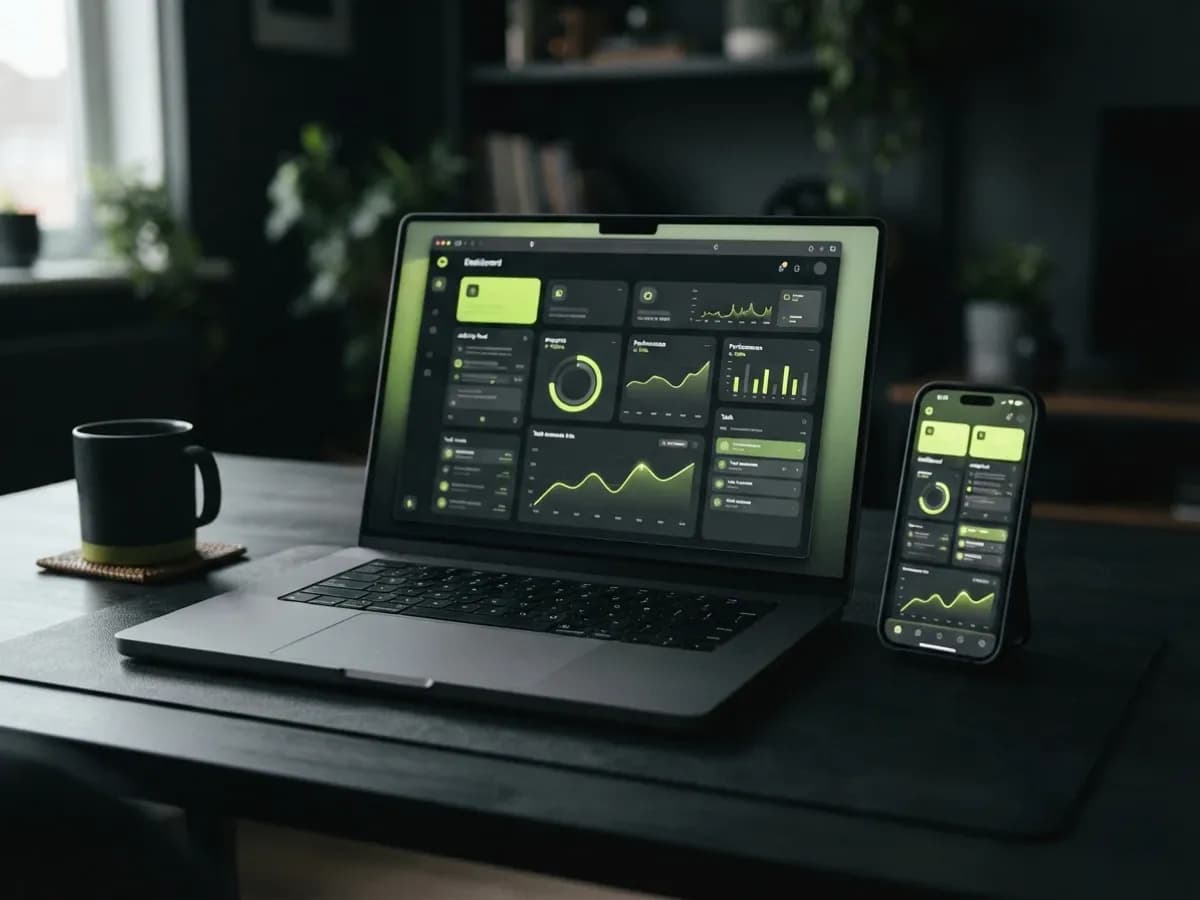
- Monitoring dashboards for uptime, errors and Core Web Vitals
- Verified backup and restore procedure
- Access inventory for code, hosting and third-party services, held in accounts your company owns
- Regular maintenance reports and release notes
 React
 Next.js
 Node.js
 Laravel
 Django
 .NET Core
 Docker
 AWS
Related
More from Web Application Development
- Main serviceWeb Application DevelopmentFast, secure and accessible web applications built with React and Next.js, designed for real users and real traffic.
- SaaS Maintenance and SupportOngoing engineering for live SaaS products: monitoring, incident response, security patching, dependency upgrades and steady roadmap work.
- Progressive Web App DevelopmentInstallable, offline-capable web apps that load fast on weak networks and reach every device from a single codebase.
- Internal Tools DevelopmentAdmin panels, dashboards and workflow apps for operations, finance and support teams, replacing spreadsheets and manual workarounds.
FAQ
Web Application Maintenance: common questions
Can you maintain a web app that someone else built?
Yes, and that is a large part of this service. We start with a structured review of the code, infrastructure and documentation, ask the previous team questions if they are reachable, and document what we learn so knowledge stays with your company, not just with us.
How are urgent issues handled?
We agree severity levels and response targets at the start. A production outage or security incident is handled immediately under the agreed coverage, while lower-priority bugs are scheduled into the backlog. You always know which category an issue is in and who is working on it.
How do you approach major framework upgrades?
In small, tested steps. We read the upgrade guides, update dependencies in a branch, run automated and manual tests in a preview environment and release behind monitoring. Keeping upgrades regular avoids the situation where an app falls so far behind that only a rewrite feels possible.
Do we need a maintenance plan if the app is working fine?
A working app still depends on libraries, browsers and hosting that keep changing. Without regular updates, security risk and upgrade effort accumulate quietly. A maintenance plan keeps that risk visible and the cost of change predictable.
Can maintenance include new features?
Small enhancements fit naturally into a maintenance backlog. Larger features are usually planned as a separate stream with their own scope, so routine upkeep is never squeezed out by roadmap work.
Planning web application maintenance?
Tell us where you are today and a solution architect will reply with clear next steps.
